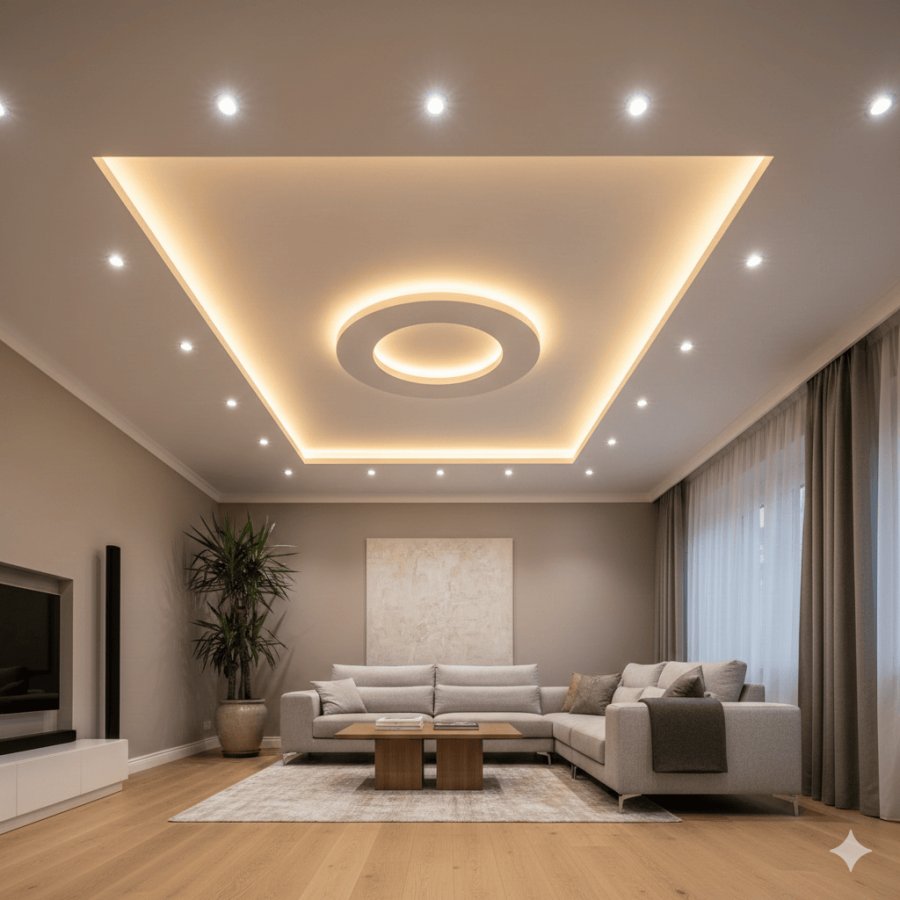
Drywall Light Strip Applications
Aesthetic Touch to Interiors: Comprehensive Guide to Drywall Light Cove Applications
Introduction: What is a Drywall Light Cove and Why Should It Be Preferred?
In interior design, lighting is one of the most critical elements that fundamentally changes the atmosphere and perception of space. Drywall light cove applications, which go beyond traditional lighting methods, have become an indispensable part of modern architecture and decoration. So, what exactly is this light cove, and why is it so highly preferred in homes, offices, and commercial areas?
Drywall light coves are niches designed as part of drywall suspended ceiling systems, usually created along the edges of the ceiling or in a desired form. LED strips placed within these niches (hidden lighting) provide indirect illumination by being concealed from direct view. This results in a soft, homogeneous, and eye-friendly light distribution.
Reasons for preferring this system include:
Aesthetic Appearance: Adding depth, modernity, and elegance to the space.
Concealed Lighting: Creating a minimalist and chic atmosphere by hiding the light source.
Energy Efficiency: Ensuring low energy consumption with LED technology.
Homogeneous Light Distribution: Minimizing shadow formation for a brighter environment.
Flexible Design: Capability to be applied in straight, oval, circular, or special geometric forms.
Basic Application Stages: Step-by-Step Drywall Light Cove Construction
A drywall light cove application is not just a simple decoration process; it is part of a suspended ceiling system that functions smoothly and lasts long when done correctly. This process consists of multiple stages requiring precision and expertise.
1. Planning and Measurement
The first step for a successful application is accurate planning.
Space Analysis: Ceiling height, space size, and purpose of use are determined. A minimum ceiling drop of 15–20 cm is ideal for hidden light coves.
Design and Drawing: The width, depth, and form of the light cove (single-layer, double-layer, oval, etc.) are meticulously projected. It is recommended that the inner face of the cove has a depth of at least 10 cm to optimize the effectiveness of the hidden light.
Material List: The required drywall boards (moisture-resistant green board or standard white board), load-bearing U and C profiles, suspension elements, screws, and joint compounds are specified.
2. Installation of the Load-Bearing Structure (Framing)
A metal frame is constructed to which the drywall boards will be securely mounted.
Suspension System Assembly: The ceiling structure is installed using the necessary hooks and suspension rods, dropping the ceiling height.
Profile Mounting: U and C profiles are fixed to the walls and the suspension system, corresponding to the light cove’s form. The profiles forming the outer edge of the light cove and the inner depth where the hidden light will be placed are positioned with great care during this stage.
3. Cutting and Mounting the Drywall Boards
Drywall boards, cut according to the measurements, are fastened to the metal frame with special drywall screws.
Covering Large Surfaces: The main surface of the suspended ceiling and the top and side surfaces of the light cove are covered with boards.
Creating Corner Details: The parts connecting the front (face) and bottom surfaces of the light cove are mounted smoothly and precisely to optimize light reflection.
4. Preparation of the Electrical Installation
The lighting, which is the main function of the hidden light cove, is planned in this stage.
Cable Routing: Appropriate cables are routed to the point where the LED strips will receive power.
Transformer Location: The LED transformer (driver) is mounted in an easily accessible yet concealed location (usually in the ceiling void).
5. Joint Compound and Surface Preparation
This is one of the most critical stages for achieving a perfect and smooth surface.
Joint Tape Application: Special joint tape (paper or mesh) is applied to the seams of the drywall boards to prevent cracks.
Joint Filling: Special joint compound is applied over the joint tape and screw heads. This process is repeated until the surface is completely smooth and then sanded down.
Primer and Paint: A primer is applied to equalize the drywall’s absorbency and ensure a homogeneous appearance of the paint. Finally, a quality ceiling paint in the room's color is applied as the final coat.
Types of Drywall Light Coves and Design Tips
Drywall light cove applications come in various types that can meet different design needs.
Popular Light Cove Models:
Single-Layer Light Cove: The simplest and most common model. It provides hidden illumination within a single niche, typically running only along the perimeter of the ceiling. It is ideal for minimalist spaces.
Double-Layer Light Cove (Cove Ceiling): A raised area (cove/tray) is created in the center of the ceiling, and lighting can be used both around this cove and the main perimeter of the ceiling. This adds more depth and volume to the space.
Spotlight Combination Light Cove: In addition to the soft illumination of the hidden light cove, recessed spotlights are added to the outer edge of the niche or other parts of the ceiling to increase the general lighting power. This offers both ambient and task lighting.
Geometric and Oval Forms: For those who want more than straight lines, custom-designed light coves with circular, oval, or S-shapes can be applied. These forms create an artistic flair, especially in living rooms and bedrooms.
Design and Lighting Tips:
Light Color and Temperature: The color of the lighting determines the mood of the space. 3000K (Warm White) evokes a feeling of relaxation and intimacy, while 4000K (Natural White) creates a more vibrant and focus-enhancing environment for offices and kitchens.
Use of Dimmers: Dimmer systems, which allow adjusting the light intensity, offer the flexibility to change the lighting ambiance according to different times of the day and needs.
Hidden Light Depth: Ensure the niche depth (face distance) is sufficient to hide the LED strips. A depth of 10 cm generally offers the best concealment performance.
Factors Determining Quality in Drywall Light Cove Applications
In line with Google's E-A-T (Expertise, Authoritativeness, Trustworthiness) criteria, here are the crucial points for ensuring long-term use and quality in the application:
Correct Profile Selection: The supporting system must use galvanized steel profiles that comply with standards. Light and weak profiles can lead to sagging and cracking problems over time.
Joint Workmanship: Cracking, the most common problem, largely results from poor-quality joint compound and tape application. An expert team should apply the joint compound in layers with the correct tape.
Moisture and Water Insulation: In humid environments like bathrooms and kitchens, moisture-resistant green drywall must be used instead of standard drywall. This prevents the material from swelling and deteriorating.
Electrical Safety: The LED transformer and cable connections must be mounted in insulated and accessible places, complying with electrical safety standards to prevent fire hazards.
Application Smoothness: Despite the thickness of the drywall, the ceiling surface must be perfectly flat and leveled. Unevenness and waves become noticeable when the lighting is turned on.
Conclusion: Transform Your Living Space with Drywall Light Coves
Drywall light cove applications are not just a lighting solution; they are a powerful design tool that defines the character of a space. When applied with correct planning, quality materials, and expert craftsmanship, they provide a modern and warm atmosphere that adds value to your home, office, or commercial space. The soft transitions offered by concealed lighting contribute to eye comfort and make the ceiling appear higher and the space wider.
When creating your design, by considering energy efficiency and application durability in addition to aesthetic concerns, you can achieve a long-lasting and satisfying result.
Frequently Asked Questions (FAQ)
How can cracking in drywall light coves be prevented?
The primary way to prevent cracks is to use high-quality joint tape (especially paper tape) and apply the joint compound in layers, allowing it to dry properly. Additionally, ensuring the ceiling framework is solid and does not flex is vital.
Which LED strips should be preferred for the light cove?
Generally, LED strips with a high lumen value, high LED density per square meter (e.g., 120 LED/m), and from long-lasting, quality brands should be preferred. The light temperature (Kelvin value) should be chosen based on the intended use of the space.
How much space does a drywall light cove take up (depth and width)?
Ideally, the minimum ceiling drop for the light cove should be 15–20 cm. To conceal the light, the inner depth of the niche (face distance) should be at least 10 cm. The width can vary between 30 cm and 60 cm based on aesthetic preference.