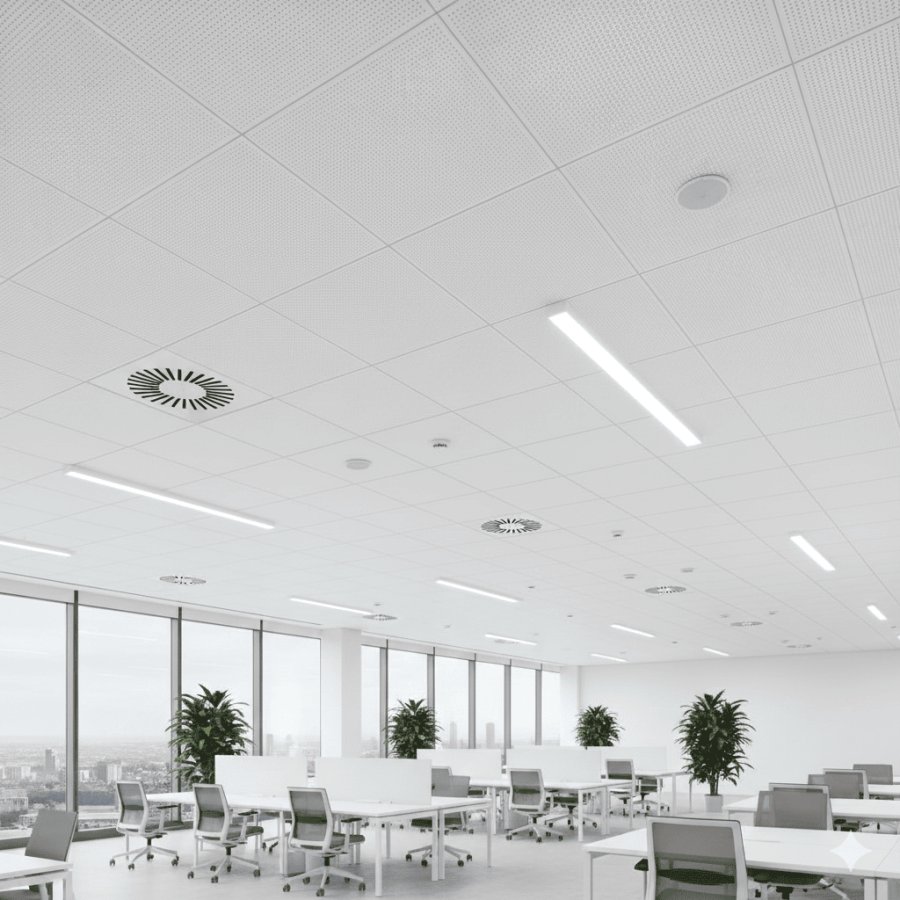
rockwool ceiling applications
Acoustic Comfort and Fire Safety: Comprehensive Guide to Mineral Wool Ceiling Applications
Introduction: What is a Mineral Wool Ceiling and Why is it Essential?
In interior design, not only aesthetics but also user comfort and building safety are of paramount importance. Mineral wool ceiling systems are one of the solutions that successfully combine these three core elements. Mineral wool ceilings stand out as an indispensable solution, especially in crowded and high-performance areas such as offices, hospitals, schools, call centers, and commercial spaces.
A mineral wool ceiling is a suspended ceiling system consisting of modular panels made from mineral wool (also known as stone wool), which is produced by melting volcanic rocks like basalt and diabase at high temperatures and spinning them into fibers. This system is applied by resting the panels onto a metal support grid or fixing them with special interlocking systems.
Key Advantages of Mineral Wool Ceilings:
Superior Acoustic Performance: Mineral wool is an excellent sound-absorbing material. It significantly reduces reverberation in spaces, improving speech intelligibility and overall sound comfort.
High Fire Safety: Mineral wool is inherently non-combustible. It does not release toxic gases during a fire and slows down the spread of the fire, contributing to life and property safety.
Moisture Resistance: It retains its form and does not sag even in high-humidity environments. This feature is critical for areas like swimming pools, bathrooms, and kitchens.
Thermal Insulation: It indirectly contributes to energy efficiency by reducing heat loss and gain through the ceiling void.
Hygiene and Health: Some specialized panels have surface coatings resistant to the growth of bacteria and fungi, making them highly preferred in hospitals and food production areas.
Types of Mineral Wool Ceilings: Choosing the Right Panel for the Application Area
Mineral wool ceiling panels are classified based on their edge details and surface properties. This variety addresses both aesthetic and functional requirements.
1. Classification by Edge Detail
| Edge Type | Description and Appearance | Aesthetics and Accessibility |
| Board Edge | Panel edges are straight and sit flush with the exposed carrier grid (T-24 or T-15). The suspension system remains clearly visible. | Most common, economical, and provides quick access. |
| Tegular Edge | Panel edges have a rebate (stepped) and drop slightly below the carrier profile. This adds depth to the ceiling, and the profile remains shaded. | Offers a more premium look. Panel access is easy. |
| Concealed Edge | The panel is mounted with a special locking system, and the carrier profile is completely hidden from below. | Provides a monolithic, seamless ceiling appearance. Access may require special demounting tools. |
2. Classification by Surface Properties
Standard Painted Surface: The most common type. Provides good light reflection and basic acoustics.
Perforated/Textured Surface: Surfaces with pores or special textures designed to enhance sound absorption performance.
Hygienic Surface: Panels specially designed for hospitals, laboratories, or cleanrooms, featuring anti-bacterial and moisture-resistant coatings (e.g., vinyl-coated).
High NRC Panels: Thick or multi-layered panels with especially high NRC (Noise Reduction Coefficient) values, intended for noisy environments like call centers or open-plan offices.
Application Process: Step-by-Step Mineral Wool Ceiling Installation
Mineral wool ceiling application is generally a fast and efficient process, especially with Lay-in or Tegular systems.
1. Pre-Preparation and Level Determination
Ceiling Level: The final height (level) of the ceiling is determined using a laser or spirit level. This level must be high enough to completely conceal the installations in the ceiling void.
Perimeter Trim: L-profiles are fixed to the perimeter of the room with screws and anchors according to the determined level. This profile finishes the edges of the ceiling and forms the border where the panels will rest.
2. Installation of the Suspension Structure (Framing)
A T-profile grid, typically made of galvanized steel, is installed to support the weight of the mineral wool panels.
Hanger System: Hanger wires are mounted to the existing concrete ceiling using steel anchors. The hanger wires support the weight of the T-profiles.
Main Carrier Profiles (T-24 or T-15): The main carrier profiles are aligned with the help of the hanger wires, and the level is adjusted. Ceiling flatness is ensured at this stage.
Cross Tees: Secondary cross tees (T-profiles) are interlocked between the main carriers according to the panel size (typically 60x60 cm or 60x120 cm).
3. Panel Placement and Finishing
Panel Mounting: Once the metal grid is complete, the mineral wool panels are carefully placed onto the carrier profiles (Lay-in or Tegular). It is essential to place the panels gently to avoid damage.
Cutting and Fitting: Where a full panel does not fit—at wall edges, around columns, or installation penetrations—panels are precisely cut with special knives and inserted. Care must be taken to ensure cut panels sit flush on the perimeter L-profiles.
Integration: Lighting fixtures, ventilation grilles, detectors, and speakers are integrated into the panels or their designated spaces within the system.
Acoustic and Fire Safety Details (Engineering Focused)
The primary reasons for choosing mineral wool ceiling applications are their superior engineering performances.
A. Metrics of Acoustic Performance
The effectiveness of mineral wool ceilings is typically measured by two metrics:
Noise Reduction Coefficient (NRC): Indicates the panel's ability to absorb sound (0.00 absorbs none, 1.00 absorbs all sound). High-quality mineral wool panels have an NRC value ranging from 0.70 to 0.95, which largely eliminates reverberation in noisy environments.
Ceiling Attenuation Class (CAC): Indicates how little sound travels through the ceiling void into the adjacent room. A high CAC value (e.g., 35+) is critical for maintaining privacy between offices.
B. Fire Resistance Classification
Due to its core raw material (stone), mineral wool is naturally Class A1 non-combustible material (according to EN 13501-1 standard).
System Durability: While the mineral wool panels themselves are non-combustible, the time the entire system (including the carrier profiles and suspension system) can withstand fire (e.g., 60 minutes, 120 minutes) is crucial. This provides valuable evacuation time during a fire.
Smoke and Toxic Gas: Unlike some other insulation and ceiling materials, mineral wool does not emit dense smoke or toxic gas when exposed to high heat, which aids visibility and breathing during evacuation.
Application Areas and Design Tips
Mineral wool ceilings are widely used in areas requiring high traffic and specific functions:
Healthcare Facilities: Hospital rooms, operating theaters, waiting rooms (Hygienic and acoustic panels).
Educational Institutions: Classrooms, lecture halls, gyms (Acoustic comfort and impact resistance).
Corporate and Commercial Areas: Open-plan offices, call centers, conference rooms (Panels with high NRC values).
Food Sector: Kitchens and food preparation areas (High moisture-resistant panels).
Design and Installation Tips:
Module Size: The most common module sizes are 60x60 cm and 60x120 cm. These modules facilitate the placement of lighting and grilles.
Importance of Edge Alignment: Especially with Tegular (rebated) panels, it is critical for aesthetic integrity that the panels sit perfectly on the T-profile and that the drop distance is uniform.
Clean Workmanship: Due to the delicate nature of mineral wool panels, making clean cuts and avoiding damage to the panel edges during installation enhances the final visual quality.
Light Reflectance: Using white panels with high light reflectance values makes the space appear brighter and indirectly reduces lighting energy consumption.
Conclusion: Enhance Space Quality with Mineral Wool Ceilings
Mineral wool ceiling applications offer a modern and sustainable solution that meets today's expectations for energy efficiency, fire safety, and human comfort at the highest level. Their superior acoustic properties can even indirectly influence work productivity, learning quality, and recovery speed in hospital environments.
When selecting a mineral wool ceiling system, technical specifications such as NRC and CAC values, panel edge detail (Lay-in, Tegular, Concealed), and moisture resistance should be taken into account. A correctly chosen and expertly installed mineral wool ceiling will provide both safety and comfort to your space for many years.
Frequently Asked Questions (FAQ)
Are mineral wool ceiling panels waterproof?
Although mineral wool panels themselves are inherently resistant to water damage, their capacity to hold pooling water is limited. However, quality mineral wool ceilings on the market are resistant to high humidity (up to 90%) and do not sag due to moisture. While panels may be damaged in flooding situations, those exposed to water can often be dried and reused.
Why are mineral wool ceilings highly preferred in offices?
The main reason is acoustic performance. Noise pollution in open-plan offices reduces speech intelligibility and decreases productivity. Mineral wool panels with high NRC values absorb ambient noise, creating a quieter and more efficient working environment.
How are mineral wool ceiling panels maintained?
Mineral wool ceilings can typically be cleaned gently with a feather duster or the soft brush attachment of a vacuum cleaner. Special coated (hygienic) panels, suitable for wiping, can be cleaned with a damp cloth. It is best to avoid using strong chemical cleaners.