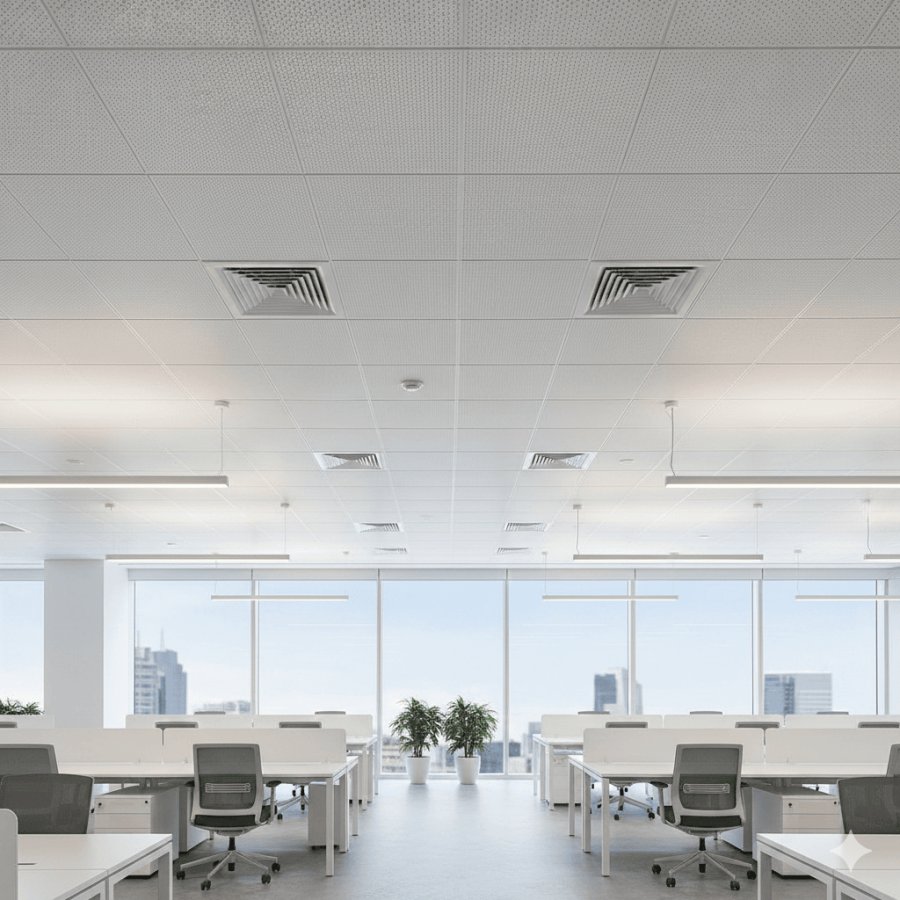
Metal Suspended Ceiling Applications
The Convergence of Durability and Aesthetics: A Comprehensive Guide to Metal Suspended Ceiling Applications
Introduction: What is a Metal Suspended Ceiling and Why Should It Be Preferred?
In the construction and interior design sectors, ceiling solutions determine not only the look of a space but also its acoustic performance, hygiene level, and service accessibility. In this context, metal suspended ceilings have become one of the most preferred solutions, particularly in commercial, industrial, and institutional buildings.
A metal suspended ceiling is a system comprising aluminum or steel panels mounted on a load-bearing metal framework, creating a void (plenum) between the existing structural ceiling and the decorative ceiling panels. This system conceals the mechanical, electrical, and plumbing (MEP) installations within the ceiling void while allowing quick access to these services when required.
Key Advantages of Metal Suspended Ceilings:
Superior Durability: Due to the nature of metal, it exhibits high resistance to moisture, impact, and fire.
Easy Maintenance and Hygiene: Panels can be wiped down, and some types are washable, making them ideal for areas requiring high hygiene standards, such as hospitals, laboratories, and kitchens.
Quick Installation and Demounting: The ease of removing and re-installing the panels speeds up access to installations and maintenance operations.
Acoustic Performance: Perforated panels combined with acoustic infill materials significantly improve room acoustics through sound absorption.
Design Flexibility: A wide range of colors, patterns, sizes, and forms offers vast design freedom.
Types of Metal Suspended Ceilings: Choosing the Right Fit for the Application Area
Metal suspended ceiling systems are categorized based on panel shape, visibility of the suspension system, and the type of metal used. The function of the space where the application is to be done is crucial for selecting the correct panel type.
1. Classification by Panel Type
| Metal Suspended Ceiling Type | Description and Features | Typical Application Areas |
| Lay-in Systems | Panels are simply placed within the exposed T-24 or T-15 grid system. The suspension grid is visible. Allows for quick installation and demounting. | Offices, shopping centers, schools. |
| Clip-in Systems | Panels are pushed up and locked onto the concealed carrier system from below. The suspension system is completely hidden. Provides a monolithic and aesthetic appearance. | Hospitals, hotels, luxury residential. |
| Hook-on Systems | Panels are suspended from the carrier system using special hooks. Often preferred for large-sized, heavy panels and in corridors. | Airports, metro stations, large lobbies. |
| Linear Systems (Strip Ceilings) | Consists of rectangular, long, and narrow panels (Baffle ceilings also fall into this category). Creates a parallel linear visual effect. | Corridors, exterior eaves, atriums. |
| Mesh Ceilings | Utilizes expanded metal or wire mesh panels. Partially conceals the ceiling void while allowing easy visual access to installations. | Exhibition halls, commercial kitchens, industrial facilities. |
2. Classification by Metal Type Used
Aluminum Ceilings: The most commonly used type due to its lightweight nature, corrosion resistance, and ease of shaping.
Galvanized Steel Ceilings: Preferred where higher durability is required and for cost-effective solutions. Typically used with a powder-coated finish.
Application Process: Step-by-Step Metal Suspended Ceiling Installation
The quality of a metal suspended ceiling application depends not only on the chosen panel type but also on the precision during the installation process. The essential steps to be followed by an expert team are:
1. Preparation and Measurement
Level Determination: The final height (level) at which the suspended ceiling will be mounted is determined using a laser or water level, and reference lines are marked on the walls.
Layout Planning: The placement of integrated elements like light fixtures, ventilation grilles, and smoke detectors is adjusted according to the panels. This minimizes panel waste and cutting labor.
2. Installation of the Suspension Structure (Framing)
Perimeter Profiles: U-profiles or L-angle trims are fixed to the walls according to the determined level. These profiles provide the aesthetic transition between the ceiling and the wall.
Hanger System: Suspension wires are mounted to the existing concrete ceiling using steel anchors/dowels. These wires are the main elements supporting the ceiling's weight, and the number of hangers per square meter is calculated based on the panel weight.
Main Carrier Profiles: The main carrier profiles (usually T-24 or specific system profiles) are aligned with the help of the suspension wires, and the level is precisely adjusted. Ceiling flatness is established at this stage.
3. Panel Installation
Panel Placement: Panels are placed according to the chosen system.
Lay-in: Panels are carefully rested onto the T-profiles.
Clip-in: Panels are pushed up and locked (until a click sound is heard) onto the concealed carrier system.
Linear: Strip panels are attached one by one to special carrier clips.
Cutting and Detail Work: In areas where full panels cannot be used, such as wall edges, around columns, or where installations pass through, panels are cut with precise measurements and placed into the perimeter profiles.
4. Integration and Finishing
Lighting and Installations: Recessed LED fixtures or other lighting elements designed for the panels are placed within them. Ventilation ducts and grilles are integrated into the system.
Inspection and Adjustment: The overall flatness of the ceiling and whether the panels are fully seated are checked. Final level adjustments are made where necessary.
Acoustic and Fire Performance: Two Critical Factors
Beyond aesthetics, metal suspended ceilings offer solutions to two fundamental engineering concerns regarding building safety and user comfort:
A. Acoustic Improvement
Hard surfaces (concrete, glass, metal) reflect sound waves, causing reverberation. Metal ceilings address this issue by:
Perforation: Small holes (perforations) are created on the surface of the panels. These holes allow sound waves to enter the panel cavity.
Acoustic Fabric/Fleece: A high-density acoustic fleece or insulation material is adhered to the back of the panel to absorb the sound entering through the holes. This combination significantly improves speech intelligibility, particularly in offices and conference rooms.
B. Fire Resistance
Metal materials are advantageous in terms of fire safety compared to other materials like drywall, as they are non-combustible. Key points to consider in the application:
Building Codes: Fire-rated suspension systems and accessories must be used in compliance with the fire regulations of the country or region where the application is made.
Protection of Services: The metal ceiling void typically houses electrical and HVAC installations. Even though the panels themselves are non-combustible, special fire barriers or appropriate suspension systems should be used to prevent the collapse of the services during a fire.
Application Areas and Design Trends
Metal suspended ceilings are used in almost every area requiring hygiene, durability, and a modern look:
Healthcare Facilities: Hospitals, laboratories, clinics (Especially hygienic Clip-in systems).
Educational Institutions: Schools, universities, libraries (Durability and acoustic properties).
Corporate Spaces: Large-scale office buildings, financial centers (Lay-in and Clip-in panels).
Transportation Hubs: Airports, train stations, metro stations (Hook-on and Linear systems).
Retail and Commerce: Shopping centers, supermarkets.
Current Design Trends:
Open Ceiling Look: In recent years, instead of a fully enclosed ceiling, Baffle ceilings (deep, spaced linear panels) or Mesh ceilings are used to partially expose the ceiling void. This adds a modern touch to industrial and loft-style spaces.
Custom Shapes and Prints: Digital printing techniques can apply architectural patterns, logos, or visual themes onto panels, allowing for branding opportunities.
Colored and High Gloss Finishes: Instead of just white and grey, high-gloss or vibrant colored panels, such as black or anthracite, are used to create striking designs, especially in social areas.
Conclusion: The Importance of Quality and Expertise in Metal Suspended Ceilings
Metal suspended ceiling applications are one of the most sensible solutions for any project seeking functionality, aesthetics, and longevity. Choosing the right panel type (Clip-in, Lay-in, Linear, etc.), ensuring appropriate acoustic performance, and using materials compliant with international fire standards directly influence the project's success.
The higher initial cost is offset in the long run by low maintenance costs, easy service access, and superior durability. It is always recommended to work with expert and experienced suppliers in this field to determine the metal suspended ceiling solution that best suits your project's requirements.
Frequently Asked Questions (FAQ)
How long do metal suspended ceilings last?
Metal suspended ceilings, when properly installed and made from quality galvanized steel or aluminum, can last for more than 20 years, provided their coating or finish is not damaged. The corrosion resistance of the metal ensures the longevity of these systems.
What is the main difference between Lay-in and Clip-in systems?
In the Lay-in system, the carrier T-profiles are visible, and the panels are simply rested on the profile. In the Clip-in system, the carrier system is concealed, and the panels are mounted with a special locking mechanism, creating a monolithic (seamless) ceiling appearance.
Do metal ceilings reduce noise?
Yes, but only when the correct product is used. For the ceiling to have sound absorption capabilities, the panels must be perforated (with holes) and have acoustic fleece/fabric adhered to their backs. Non-perforated panels reflect sound.